Frederick James Archer remains the most celebrated jockey in British racing history, yet his story is inextricably bound to tragedy. Though born in Cheltenham, Archer spent his entire adult life in Newmarket, where he rose to become Champion Jockey for thirteen consecutive years before taking his own life at the age of twenty-nine.
Apprenticeship at Heath House
Archer arrived in Newmarket in February 1868, aged just ten, to begin his apprenticeship with trainer Mathew Dawson at Heath House on the edge of the town. He weighed a mere 4st 11lb upon arrival. Dawson, a Scottish trainer who would go on to win twenty-eight British Classics, became the dominant figure in Archer's professional life. The young jockey's first ride at Newmarket came on 14 October 1869 in the Newmarket Town Plate, mounting a horse named Honoria.
Dawson and Archer formed one of racing's most successful partnerships. Archer became Dawson's stable jockey in 1874 and retained the position until his death twelve years later. Dawson reportedly called his protégé "the little cat" when pleased, but "that damned, long-legged, tin-scrapping young devil" when frustrated. The latter epithet gave rise to Archer's enduring nickname: "The Tin Man."
The Tin Man's Success
The moniker referred to Archer's reputation for miserliness. Stories circulated of him asking bystanders for coins to add weight when he was short a few pounds, then neglecting to return them. Yet this parsimony belied extraordinary earnings. At his peak, Archer was reputed to be worth £250,000, and his estate at death was valued at £66,662, equivalent to approximately £7.5 million today.
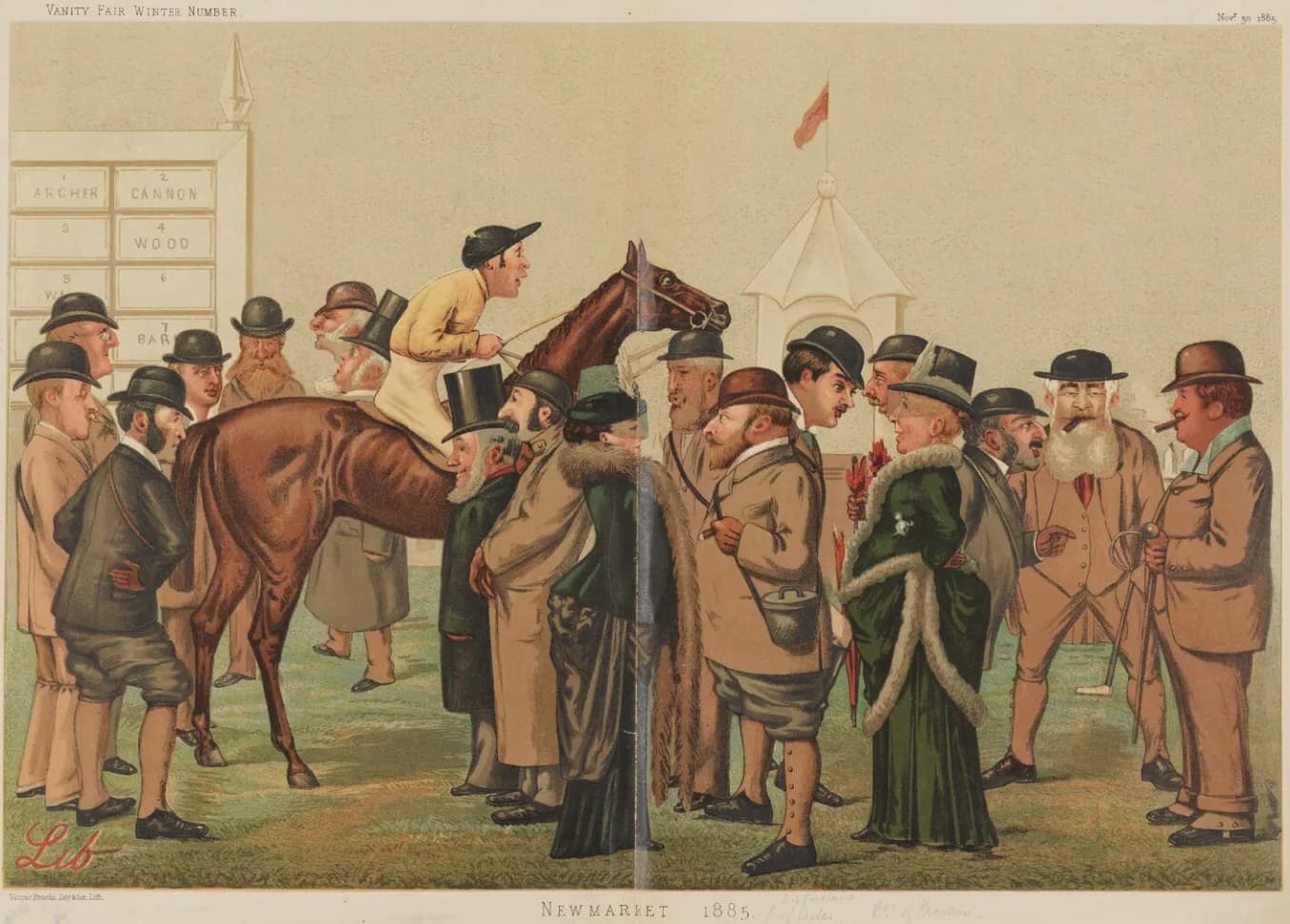
His record remains staggering. Archer rode 2,748 winners from 8,084 starts, achieving a win rate above 34 per cent. He was Champion Jockey every year from 1874 to 1886, and his 246 winners in 1885 set a record that stood until Gordon Richards surpassed it in 1933. His Classic victories totalled twenty-one: five Derbys, four St Legers, four 2,000 Guineas, four 1,000 Guineas, and four Oaks. Contemporaries described him as "the best all-round jockey that the turf has ever seen."
Life and Marriage in Newmarket
Archer built Falmouth Lodge and Stables on the edge of Newmarket in 1882, now known as Pegasus Stables. The property reflected his retained connection to Lord Falmouth, who had employed him since 1874 for an annual retainer of £100. On 31 January 1883, Archer married Helen Rose "Nellie" Dawson at All Saints' Church in Newmarket. The bride was the daughter of John Dawson and niece of Archer's trainer Mathew. The ceremony was described as "the celebrity wedding of the decade."
The couple's happiness was brief. Their son William died at birth in January 1884. A daughter, also named Nellie, was born on 6 November 1884. Two days later, the mother died from post-natal eclampsia. Archer was devastated. According to those who knew him, he remarked: "Poor Nellie! She was my glory, my pride, my life, my all."
The Physical Toll
Archer's physical stature made his profession extraordinarily demanding. At 5ft 10in, he was unusually tall for a jockey of any era. To ride at weights as low as 8st 7lb, he subjected himself to severe wasting regimes. His diet consisted of half an orange, a sardine, and a nip of champagne. He once left a dining room at the sight of steak and kidney pie. A Newmarket doctor, J.R. Wright, concocted "Archer's Mixture," a purgative that Archer consumed by the sherry glass.
In October 1886, Archer lost six pounds in two days to make a ride in Ireland. He then wasted to 8st 7lb for the Cambridgeshire Handicap, going three days without food. By this point, friends noted his delirium and erratic behaviour.
The Final Day at Falmouth House
On 8 November 1886, Archer died at Falmouth House, his Newmarket residence. He had purchased a revolver because the isolated house was exposed and he had experienced trouble with housebreakers. His sister, Mrs Colman, struggled with him before he shot himself in the mouth. The coroner's inquest recorded a verdict of "suicide whilst in a state of unsound mind."
Archer's debts totalled £30,000, largely from betting losses, including a substantial wager on St Mirin beaten by a head. The funeral on 12 November 1886 drew wreaths from the Duke of Westminster and the Prince of Wales. Archer was buried in Newmarket Cemetery, his grave situated to the right of the chapel.
Legacy in Newmarket
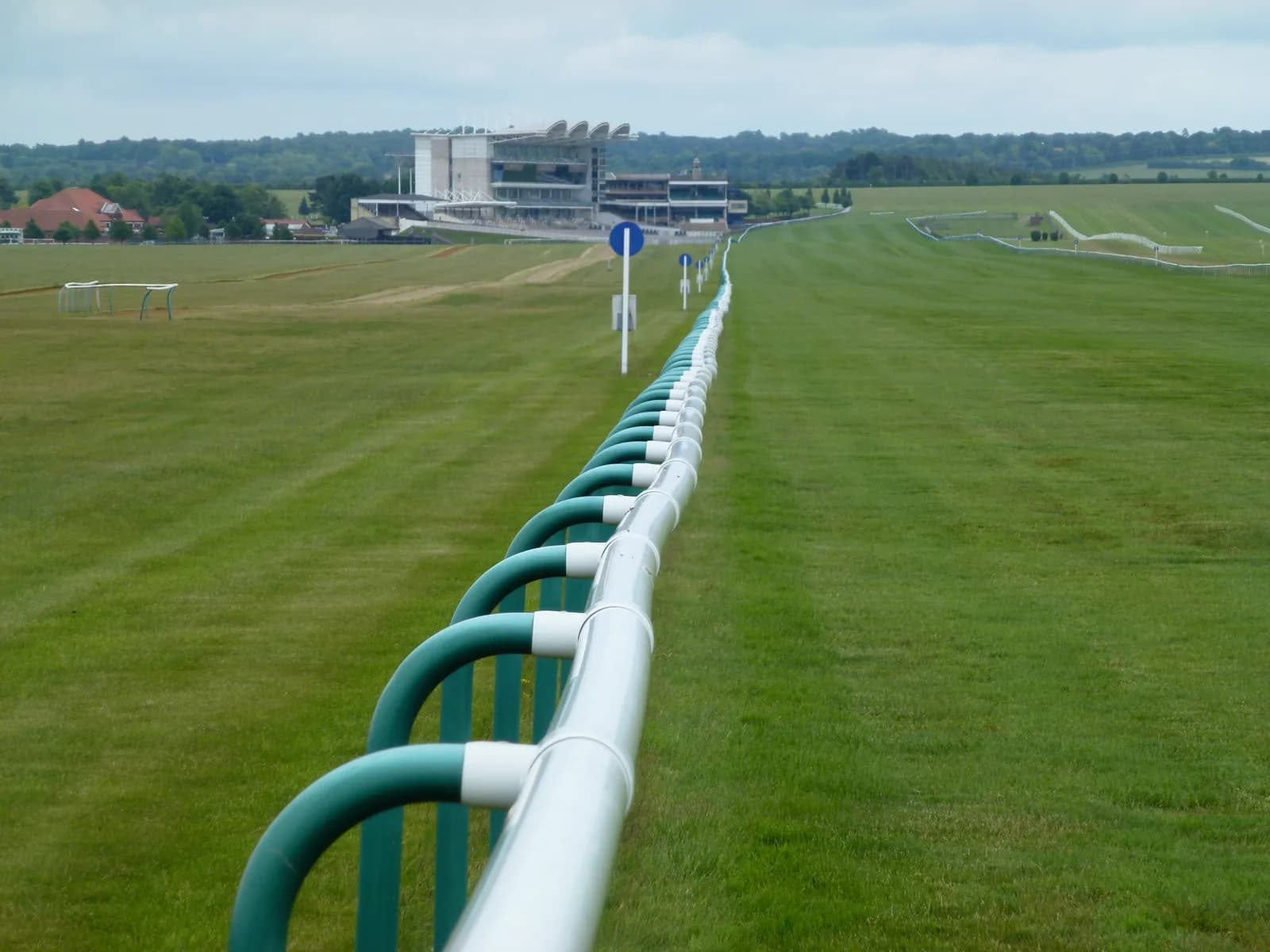
Archer's connection to Newmarket endures in multiple forms. The Fred Archer Stakes, now called the Charlie Wood Stakes, was run at the Newmarket July Course for many years. The National Horseracing Museum on Palace Street displays his effects, including the gun used in his suicide. Visitors to the town can still see Heath House, where he learned his craft, and Pegasus Stables, which he built. His ghost is said to ride a light grey horse across Newmarket Heath.
John Porter, a contemporary trainer, assessed him thus: "His whole heart and soul were in the business he had in hand... Fred Archer was a powerful personality as well as a brilliantly successful jockey." For Newmarket, he remains both a source of pride and a cautionary tale about the cost of greatness.